
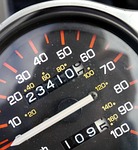
Whether you are a self-employed contractor tracking business miles, an employee seeking reimbursement, or a volunteer logging charity trips, tracking your mileage correctly can save you hundreds or even thousands of dollars. The IRS sets standard mileage rates each year, and for 2026 the business rate is projected at 70 cents per mile. Use our free mileage reimbursement calculator to compute your total deduction across all mileage categories, estimate your tax savings, and generate a clear summary you can use for recordkeeping.
Free Mileage Reimbursement Calculator
Calculate your 2026 IRS mileage deduction across all categories
2026 IRS rate: $0.70/mile — Driving for work, client visits, errands for your business
2026 IRS rate: $0.21/mile — Driving to/from medical care (or qualifying military move)
2026 IRS rate: $0.14/mile — Driving in service of a qualified charitable organization
Business-related tolls and parking are deductible in addition to the mileage rate
Used to estimate your tax bracket and tax savings from the mileage deduction
How This Free Mileage Reimbursement Calculator Works
Step 1: Enter Your Miles by Category
The IRS assigns different standard mileage rates depending on the purpose of travel. Business miles are reimbursed at the highest rate ($0.70/mile for 2026), medical and moving miles at $0.21/mile, and charitable miles at $0.14/mile. This free mileage reimbursement calculator separates each category so you get an accurate total.
Step 2: Add Tolls and Parking
Business-related tolls and parking fees are deductible in addition to the standard mileage rate. These costs are not included in the per-mile rate, so you can claim them on top of your mileage deduction.
Step 3: Choose Your Time Period
Enter miles for the full year, per month, or per week. The free mileage reimbursement calculator will automatically annualize your entries and also show you the periodic breakdown in all three timeframes.
Step 4: Review Your Deduction and Tax Savings
Your results include a category-by-category breakdown, periodic summaries, estimated federal tax savings based on your tax bracket, and a comparison between the standard mileage method and estimated actual vehicle expenses to help you decide which method is better for your situation.
Frequently Asked Questions
What is the 2026 IRS standard mileage rate?
For 2026, the projected IRS standard mileage rates are 70 cents per mile for business use, 21 cents per mile for medical and qualifying moving purposes, and 14 cents per mile for charitable service. The business rate is adjusted annually based on vehicle operating costs, while the charity rate is fixed by statute. Use our free mileage reimbursement calculator to apply these rates to your actual miles driven.
Can employees deduct mileage on their taxes?
Under current law (TCJA, 2018–2025 and potentially extended), W-2 employees cannot deduct unreimbursed mileage on their federal tax return. The mileage deduction is available to self-employed individuals (Schedule C) and business owners. Some states still allow employee mileage deductions on state returns. Employees should seek reimbursement directly from their employer instead.
What is the difference between standard mileage and actual expenses?
The standard mileage method multiplies your business miles by the IRS rate ($0.70/mile for 2026). The actual expense method requires tracking gas, insurance, repairs, depreciation, registration, and all other vehicle costs, then multiplying by the percentage of business use. You can use whichever method produces a larger deduction, but you must use the standard method in the first year if you want the flexibility to switch later.
Do I need to keep a mileage log?
Yes. The IRS requires a contemporaneous written log for every trip you claim. This must include the date, destination, business purpose, and miles driven. Without a log, the IRS can disallow your entire mileage deduction in an audit. Apps like MileIQ and Stride make logging easy.
Are tolls and parking included in the mileage rate?
No. Business-related tolls and parking fees are deductible in addition to the standard mileage rate. This is why our free mileage reimbursement calculator includes a separate input for tolls and parking.
Can I deduct commuting miles?
No. Driving from your home to your regular place of work (commuting) is never deductible, regardless of distance. However, if you work from a home office that qualifies as your principal place of business, trips from home to client sites or other work locations become deductible business miles.
What if I use my car for both business and personal driving?
You can only deduct the business-use portion. Track your business miles separately from personal miles. The standard mileage rate applies only to business miles, not total miles driven during the year.
Need More Free Pay Tools?
- Free Paycheck Calculator
- Free Hourly to Salary Calculator
- Free Salary to Hourly Calculator
- Free Overtime Pay Calculator
- Free Tax Withholding Calculator
- Free 1099 vs W2 Calculator
- Free Self Employment Tax Calculator
- Free Bonus Tax Calculator
- Free 1099 Tax Calculator
- Free Income Tax Calculator
- Free Quarterly Tax Calculator
- Free Payroll Tax Calculator
- Free Work Hours Calculator
- Free Net Pay Calculator
- Free Tax Refund Estimator
- Free 401k Calculator
- Free Biweekly Pay Calculator
- Free Pay Raise Calculator
- Free Timecard Calculator
- Free Freelance Tax Calculator
- Free Roth IRA Calculator
- Free Annual Salary Calculator
- Free Double Time Calculator
- Free Effective Tax Rate Calculator
- Free Marginal Tax Rate Calculator
- Free Employer Cost Calculator
- Free Independent Contractor Calculator
- Free Take Home After 401k Calculator
- Free Time and a Half Calculator
- Free Tax Bracket Calculator
- Free Semi-Monthly Pay Calculator
- Free Weekly Pay Calculator
- Free Monthly Salary Calculator
- Free Gross to Net Calculator
- Free Net to Gross Calculator
- Free FICA Tax Calculator
- Free Capital Gains Tax Calculator
- Free Estimated Tax Calculator
- Free Tax Penalty Calculator
- Free Standard Deduction Calculator
- Free SEP IRA Calculator
- Free Solo 401k Calculator
- Free QBI Deduction Calculator
- Free Mileage Reimbursement Calculator
- Free Home Office Deduction Calculator
- Free Minimum Wage Calculator
- Free Tip Calculator
- Free Commission Calculator
- Free PTO Payout Calculator
- Free Severance Pay Calculator
Understanding Mileage Deductions and Reimbursements
The IRS standard mileage rate is one of the most commonly used deductions among self-employed workers, rideshare drivers, real estate agents, traveling salespeople, and small business owners. Rather than tracking every fuel receipt, oil change, and insurance payment, the standard rate lets you multiply your business miles by a single per-mile figure that the IRS calculates to represent average vehicle operating costs across the country.
For 2026, the projected business rate of $0.70 per mile reflects the ongoing increase in fuel, insurance, maintenance, and depreciation costs. This rate has climbed steadily in recent years, from $0.56 in 2021 to $0.625 in 2022 (mid-year adjustment) to $0.67 in 2024. The rate is published annually, typically in December for the following year.
Standard Mileage vs. Actual Expenses — Which Is Better?
The IRS gives self-employed taxpayers a choice: use the standard mileage rate or track actual vehicle expenses. The actual expense method requires you to calculate the total cost of owning and operating your vehicle — including gas, oil, tires, repairs, insurance, registration fees, lease payments or depreciation, and even car washes — then multiply the total by your business-use percentage. If you drive an expensive vehicle with high insurance and maintenance costs, or if your business-use percentage is very high, actual expenses often produce a larger deduction. However, the recordkeeping burden is significantly heavier.
The standard mileage method is simpler: just track your miles and multiply by the rate. It tends to favor drivers with fuel-efficient vehicles, drivers with older paid-off cars, and anyone who wants to minimize recordkeeping. Our free mileage reimbursement calculator provides a rough comparison of both methods to help you decide which approach produces better results for your situation.
Who Can Claim the Mileage Deduction?
Under the Tax Cuts and Jobs Act (TCJA) enacted in 2018, W-2 employees can no longer deduct unreimbursed vehicle expenses on their federal tax return. This rule applies through at least 2025 and may be extended. The mileage deduction is primarily available to self-employed individuals who report business miles on Schedule C, and to armed forces members claiming moving expenses. Some states — including California, New York, and Pennsylvania — still allow employees to deduct unreimbursed mileage on state returns. For the federal rules, consult IRS Standard Mileage Rates.
Common Mileage Deduction Mistakes to Avoid
The most frequent audit trigger involving mileage is lack of documentation. The IRS requires a log with the date, destination, business purpose, and miles for every single trip. Reconstructing a log after the fact is not considered “contemporaneous” and can be challenged. The second most common mistake is claiming commuting miles — driving between your home and your regular workplace is never deductible, even if the commute is long. However, if you have a qualifying home office, all trips from home to business destinations become deductible. Third, many taxpayers forget to deduct tolls and parking on top of the mileage rate — these are separate deductible expenses. For detailed guidance on vehicle deduction rules and exceptions, see IRS Publication 463 — Travel, Gift, and Car Expenses.
Tracking mileage consistently throughout the year — rather than trying to estimate at tax time — is the single most important thing you can do to protect your deduction in an audit. Free apps like MileIQ, Stride, and Everlance can automate tracking by detecting when you are driving and logging trips with GPS. Combined with our free mileage reimbursement calculator, you can stay on top of your deduction amount all year long.